
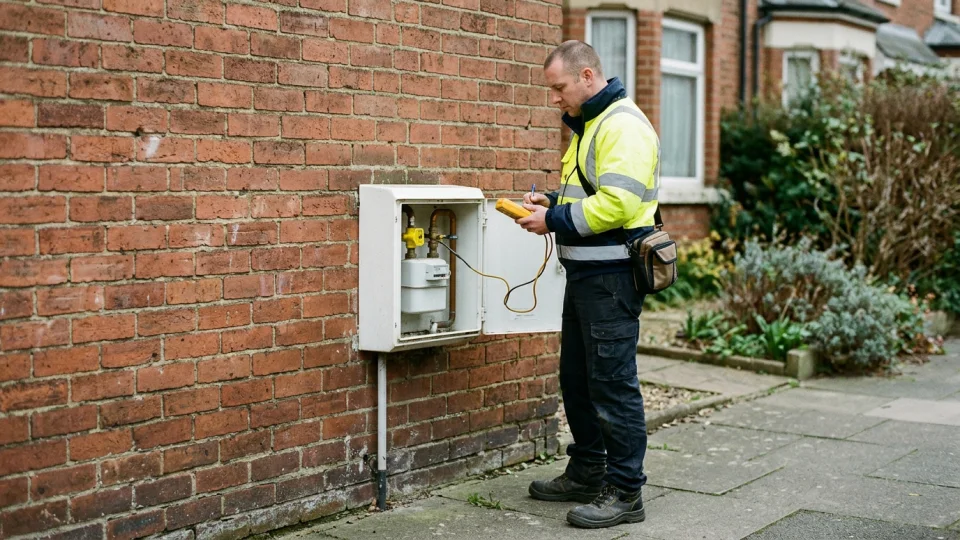
Electricity can often be switched back across remote substations within minutes once a cable fault is isolated—but a mains natural gas interruption affecting a neighbourhood street is fundamentally different. Even a single water-filled gas main caused by a burst water pipe nearby forces engineers to turn off every property individually, pump the steel or polyethylene distribution pipe dry, and visit every single doorstep twice before boilers can safely fire again.
1. Gas Smell Emergency vs Area Pressure Loss
Always apply life-safety rules first: if you smell rotten-egg mercaptan odour anywhere inside or outside your property, never inspect meter controls yourself—open doors and windows, avoid light switches and naked flames, leave the building and call the National Gas Emergency Service free on 0800 111 999 (Great Britain) or 0800 002 001 (Northern Ireland). Check regional status updates on our UK Gas Network Monitor.
2. Statutory UK Gas Outage Compensation Rules
Across Great Britain, the four regional Gas Distribution Networks (Cadent Gas, SGN, Northern Gas Networks and Wales & West Utilities) operate under Ofgem Guaranteed Standards of Performance:
| Standard | Domestic Qualifying Threshold | Payment & Important Exclusions |
|---|---|---|
| Unplanned Domestic Gas Loss | Supply fails for more than 24 continuous hours. | Statutory payment of £60 for each complete 24-hour period without gas (paid by your gas supplier after notification from the GDN; excluded if interruption affected >30,000 homes, caused by third party/severe weather exception or inside your internal pipework). |
| Advance Planned Works Notice | Less than 5–7 working days written notice before planned mains replacement shut-off. | Triggers statutory failure payment if notice rules were missed (claimable within statutory window). |
| Alternative Heating & Cooking | Priority Services Register households facing loss of gas heating in cold weather. | Must be offered free temporary fan heaters and electric hotplates directly at the doorstep or site welfare hub. |
3. Why You Must Never Reopen Your Own Gas Valve After a Street Outage
If a GDN engineer visits your meter box during a street outage to shut off your Emergency Control Valve (ECV), they attach a warning tag stating Do Not Turn On. Breaking that tag and reopening the valve yourself before the engineer returns is genuinely dangerous for two reasons cited by the Health and Safety Executive (HSE):
- Air Locks & Unlit Burners: While street mains were depressurised and repaired, air entered the pipes. Sending an air-gas mixture into older hobs or pilot lights can briefly extinguish flames and then release unignited gas once pure natural gas reaches the burner.
- Mandatory Tightness & Purge Verification: A Gas Safe registered engineer must test pressure integrity across your home installation, purge trapped air safely out through an approved vent point, and check every gas hob, fire and combi boiler fires cleanly before leaving.
4. Practical Checklist While Waiting for Purge & Relight Engineers
- Leave a clear mobile contact number on any doorstep card so GDN coordinators know when someone is home for second-visit reconnection.
- Verify that any electric fan heater loaned by the gas network sits on a hard, level surface well clear of curtains and plugged straight into a wall socket—never into coiled extension leads.
- If your combi boiler locks out with an ignition fault code (such as F1/EA/L2) hours after restoration, check if the reset button clears residual air in the internal pipework, or contact your landlord/boiler cover engineer rather than forcing gas valves.